
by SupremeLending | Jun 20, 2024
Ease into a Mortgage with a Temporary Interest Rate Buydown

In today’s mortgage market, finding ways to make homeownership more affordable is key. One effective option is a temporary rate buydown mortgage. What is a rate buydown and how can it benefit borrowers? Let’s explore how a mortgage buydown works, types of buydowns, and unique advantages of these programs – especially in higher interest rate environments. Plus, learn how Supreme Lending offers a variety of buydown options to fit unique mortgage needs, including the possibility of combining down payment assistance with a temporary rate buydown, offering more affordability for first-home homebuyers.
How Does a Temporary Rate Buydown Mortgage Work?
A temporary rate buydown mortgage allows borrowers to reduce their monthly mortgage payment with a lower interest rate for a specific period of time, generally the first one to three years of the loan term. This means lower monthly payments during the agreed upon years of the mortgage. The cost difference is covered by an upfront lump sum, typically paid by the seller, builder, or lender at closing. A portion of the funds is released from an escrow account each month to cover the interest difference.
As the name suggests, these buydowns are temporary. After the buydown period ends, the mortgage interest rate resets to the original, higher rate for the remainder of the loan term.
Types of Rate Buydowns
Temporary rate buydowns can be applied to a variety of mortgage types including Conventional, FHA, and VA loans. Additionally, there are different buydown options depending on the program and duration of the initial rate buydown.
1-Year Buydown (1-0 Buydown)
- In the first year, the interest rate is reduced by 1%.
- From the second year onward, the interest rate reverts to the original note rate.
- This option may be ideal for buyers expecting their income to increase in the near future.
2-Year Buydown (2-1 Buydown)
- In the first year, the interest rate is reduced by 2%.
- In the second year, the rate is reduced by 1%.
- From the third year onward, the interest rate reverts to the original note rate.
- This provides a more extended period of lower monthly payments, allowing more time to adjust to the higher rate.
3-Year Buydown (3-2-1 Buydown)
- In the first year the interest rate is reduced by 3%.
- In the second year, the rate is reduced by 2%.
- In the third year, the rate is reduced by 1%.
- From the fourth year onward, the rate reverts to the original note rate.
- This offers the longest period of reduced payments for affordable financing.
Benefits of Buydowns in a Higher Rate Market
Lower Initial Payments
The primary benefit of a temporary rate buydown mortgage is lower monthly payments during the early years of the loan. This can be especially beneficial in a higher-rate market, making homeownership more accessible.
Financial Flexibility
Lower initial payments can provide the flexibility needed to handle other expenses associated with purchasing a home, such as relocating costs, furnishing the new home, or making home renovations or repairs.
Gradual Adjustment
A buydown allows borrowers to ease into the full mortgage payment gradually, giving them time to adjust their budget and plan accordingly.
Possibility to Refinance* If Rates Drop
Temporary rate buydown mortgages are a great option to provide lower initial monthly payments during the specified buydown period. After that, if interest rates drop below the original note rate, the borrower may have the option to refinance to a lower rate. This may save costs in interest over the life of the loan.
*By refinancing an existing loan, total finance charges may be higher over the life of the loan.
Supreme Lending’s Buydown Options
Supreme Lending is proud to offer several buydown options to suit individual mortgage needs. Our experienced mortgage professionals can help you explore 1-year, 2-year, and 3-year buydown programs to see if this option is right for you. We may also be able to apply a temporary rate buydown with our Supreme Dream Down Payment Assistance program, making homeownership even more accessible. This combination may significantly reduce upfront costs and monthly payments in the early years of the mortgage.
To learn more about temporary rate buydown mortgages and other home financing options, contact Supreme Lending today.
by SupremeLending | Jun 5, 2024
Understanding a Bank Statement Loan

For entrepreneurs and self-employed individuals, securing a mortgage can often be a challenge. Traditional home loans typically require W-2 tax returns and other documentation that may not accurately reflect the income of self-employed borrowers. This is where Supreme Lending’s bank statement loans come in. Designed for those who run their own businesses, bank statement loans offer an alternative option for self-employed homebuyers without the need for conventional income and tax documentation. Here’s everything you need to know about bank statement mortgages.
What Is a Bank Statement Loan?
A bank statement loan, commonly known as a self-employed mortgage, is a type of home loan designed for those who may have non-traditional sources of income. Simply put, instead of relying on W-2 forms and tax returns, lenders use the borrower’s bank statements to verify their income to approve the loan. This allows self-employed individuals to qualify for a mortgage based on their cash flow rather than their taxable income, which may be reduced by business expenses and tax deductions.
How Do Bank Statement Mortgages Work?
Income Verification
For these types of loans, lenders typically review the past 12 to 24 months of your personal or business bank statements to determine your average monthly income. This provides an accurate picture of your financial health and ability to repay the loan and make monthly mortgage payments.
Down Payment Requirements
The down payment requirements for bank statement loans can vary depending on the lender, but it can generally range from 10% to 20%. A larger down payment amount can sometimes secure more favorable terms and interest rates.
Credit Score and Other Requirements
While these loans are designed to be a more flexible homebuying option, mortgage professionals will still review your credit score, assets, and other financial factors to assess the potential lending risk. A higher credit score may increase your chances of approval for the loan.
Common FAQs and Considerations
Who Can Benefit from a Bank Statement Mortgage?
As mentioned above, these loans are ideal for self-employed borrowers, including small business owners, corporation owners, freelancers, and gig economy workers whose income may be substantial, but not consistently documented like W-2 employees. It’s a great option if you have strong cash flow but your tax returns don’t reflect your true income due to tax write-offs and deductions.
What Types of Properties Can Qualify?
These loans can be used to purchase various types of properties, including single-family homes, condos, townhouses, and in some cases multi-family properties. There are also options for second homes and investment properties depending on the loan type. Each lender has specific property requirements and guidelines, so it’s important to work with a knowledgeable loan officer to help guide you through the process.
What Are Interest Rates?
Interest rates for bank statement loans may be higher than those for Conventional loans due to the potential increased risk to lenders. However, if a borrower has a strong financial profile, it may be possible to lock in a more competitive rate. Additionally, rates are typically lower for a 24-month bank statement loan versus 12 months.
How Is Income Calculated?
For bank statement mortgages, lenders will typically sum up your total deposits over the selected period of time (12 to 24 months) and divide by the number of months to calculate your average monthly income. Business-related expenses and unusual deposits may be excluded to ensure a more accurate income assessment.
What If My Spouse Is a W-2 Employee?
Depending on the loan program and circumstances, lenders may consider a spouse’s income as well when calculating their joint eligibility for a bank statement loan. For example, a business owner’s average monthly income and a spouse’s W2s, paystubs, and employment verification could both be used to determine their combined income.
Benefits of Bank Statement Lending
Owning your own business is part of the American Dream. However, business owners may not qualify for a traditional mortgage to buy their American Dream Home. Bank statement loans offer that freedom. They give self-employed borrowers flexibility to use their true income without being tied down by tax deductions or business expenses. It also opens the door to homeownership for more people in the community—whether it’s their first home or tenth.
If you’re self-employed and ready to explore your mortgage options, contact Supreme Lending today. We’re here to help you navigate the process and find the best loan option to fit your unique needs.
Related Articles:
by SupremeLending | May 13, 2024
An Investor’s Guide for DSCR loans
Whether you’re just getting started with your investment portfolio or are a seasoned investor, navigating real estate is all about strategy. Supreme Lending is proud to offer a program to help investors easily finance dream investment homes without a traditional mortgage: the Debt Service Coverage Ratio (DSCR) loan. Here’s a guide for everything you need to know about DSCR loans, how they work, and the benefits they offer for investors looking to maximize returns.
DSCR Loan Basics
Simply put, DSCR is the ratio of a property’s rental income to its mortgage payment, taxes, and insurance. This helps lenders measure an investor’s ability to cover the mortgage from the cash flow generated from the property.
DSCR is similar to Debt-to-Income (DTI) for typical mortgages. However, the difference is that for a traditional loan, the percentage to service the debt is dependent on the borrower’s personal income, whereas for income-producing properties, it’s based on the property’s income. No income or employee verification is needed.
How To Calculate DSCR
To calculate the DSCR, divide the property’s net operating income (NOI) by its total debt service (TDS). The formula is as follows:
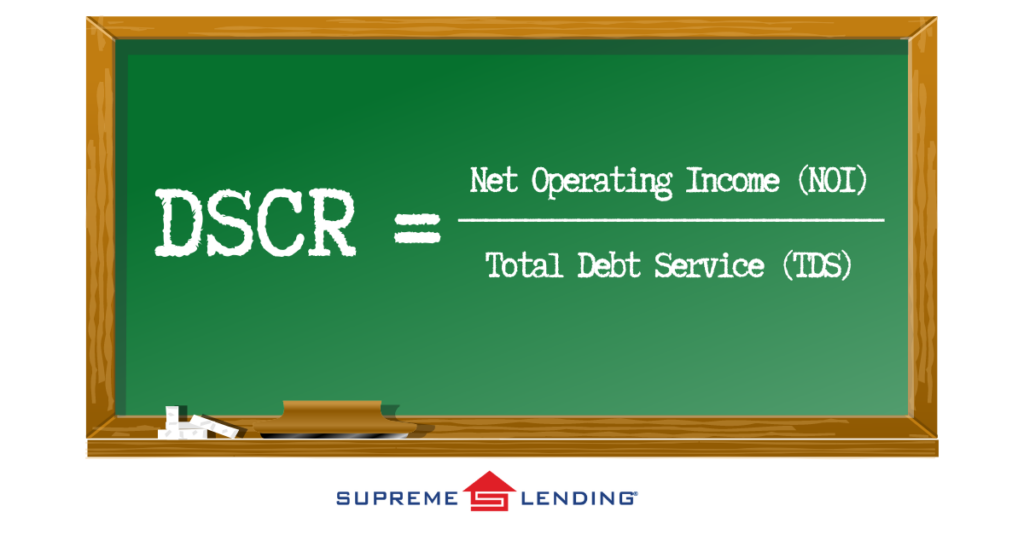
A DSCR of 1.0 indicates that the property’s net operating income is exactly equal to its debt obligations. A DSCR greater than 1.0 signifies that the property generates more income than needed to cover its debt payments, while a DSCR below 1.0 indicates insufficient income to cover debt payments. Typically, rates of 1.25 or greater are ideal and borrowers may receive better pricing with a higher ratio.
Eligibility for DSCR Loans
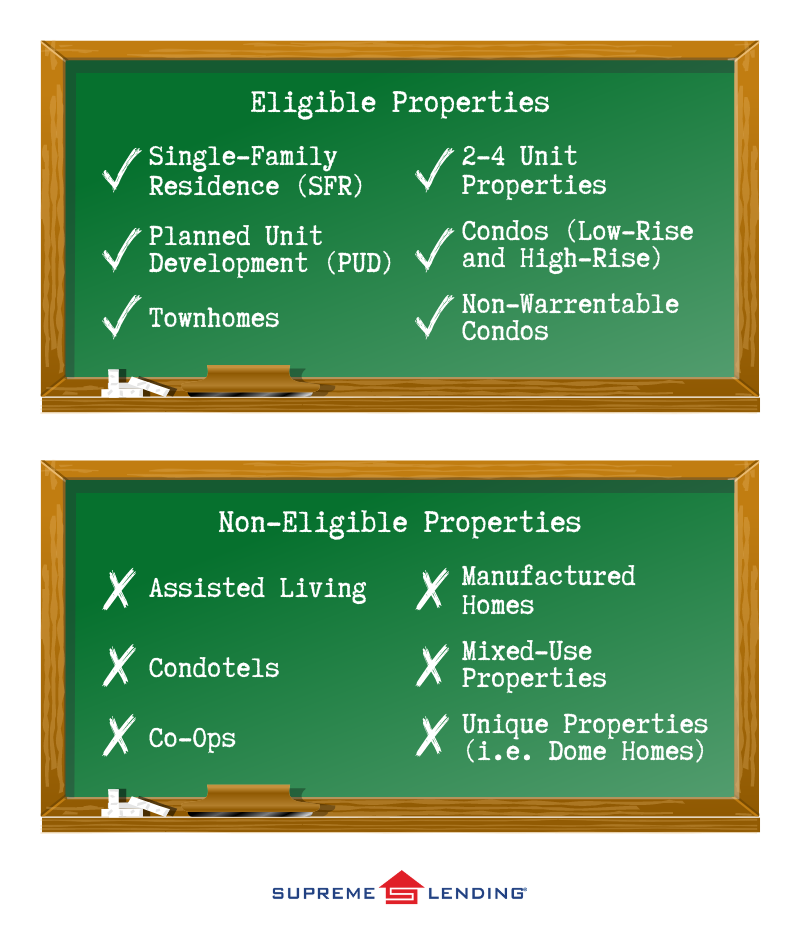
While guidelines to qualify for DSCR loans vary by lender, here’s an overview of common program highlights of Supreme Lending’s DSCR offering.
- Eligible borrowers include both first-time and experienced investors, but first-time homebuyers do not qualify.
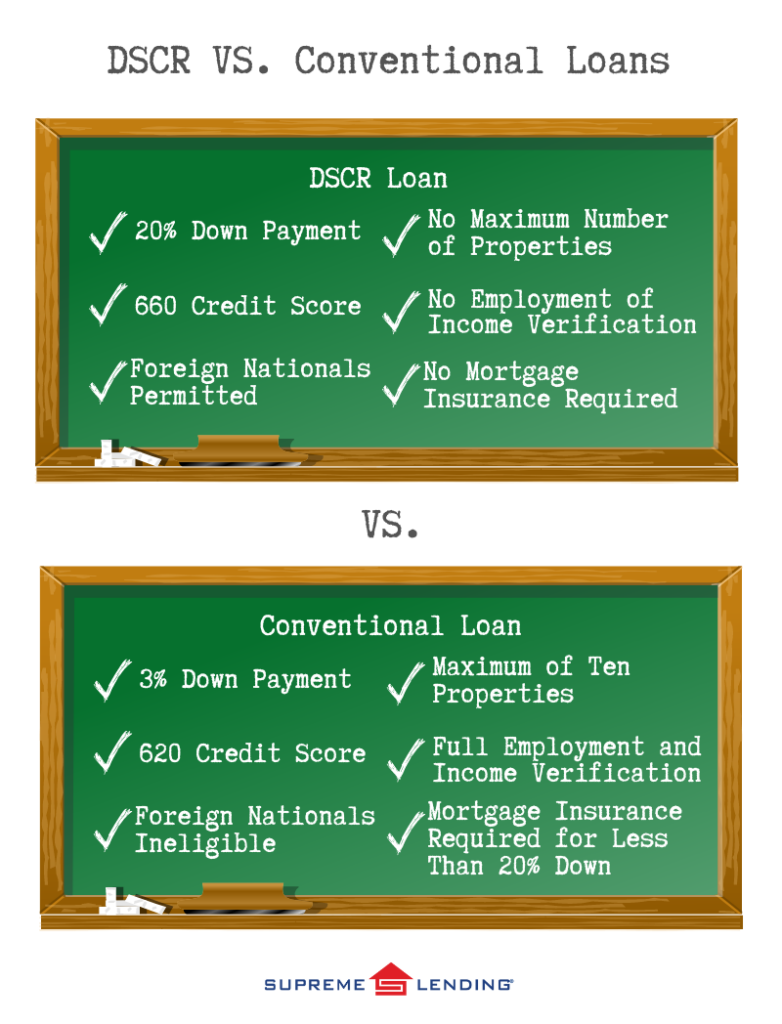
- Foreign Nationals can qualify if eligible.
- First-time investors allowed at 75% Loan-to-Value (LTV).
- 20% down payment required; 25% for first-time investors.
- Vesting in entities permitted such as partnerships or LLCs (Limited Liability Company).
- Purchase and refinance options available.
- Investment, income-producing properties only.
Why Choose a DSCR Loan?
Prospective borrowers for DSCR loans may be looking to take advantage of home investments and generate rental income. For example:
- Borrowers looking to start their real estate investment portfolio.
- Investors looking to expand their current real estate portfolio.
- Eligible Foreign Nationals looking for an investment opportunity in the U.S.
- Borrowers in an LLC looking to invest in a property with their business partner.
- Investors pursuing niche strategies like short-term rentals or the BRRRR (Buy, Rehab, Rent, Refinance, Repeat) Method.
Benefits of DSCR Loans for Investors
- No documentation of income or employee verification versus conventional investment property loans, saving time and less documentation.
- No maximum number of properties—the sky is the limit!
- No mortgage insurance required compared to other loan options.
By evaluating a property’s ability to generate income relative to its debt obligations, DSCR loans provide valuable insights and savvy financing for investors—both first-time and seasoned investment professionals.
Contact your local Supreme Lending branch to learn more about DSCR loans and other mortgage options
by SupremeLending | May 9, 2024
Learn why FHA loans may be a perfect option for first-time buyers.

While first-time buyers are hunting for their perfect home, they’ll also need to be on the hunt for the perfect mortgage—which may seem more overwhelming and not as enjoyable as touring properties. There are several financing options to choose from and programs available. It’s all about finding the one that fits best. At Supreme Lending, our goal is to provide the guidance you need to make informed decisions and be confident with your loan choice.
In this article, we’re highlighting a mortgage option that is designed specifically to help first-time buyers, FHA loans. Discover the many FHA loan benefits and why this option may be right for you.
Understanding FHA Loans: A Brief Overview
First, what exactly is an FHA loan? The Federal Housing Administration (FHA), a branch of the U.S. Department of Housing and Urban Development (HUD), insures FHA loans, which are issued by approved lenders. This insurance protects lenders against losses if a borrower defaults on their loan, making FHA loans less risky for lenders and consequently more accessible to first-time buyers.
FHA Loan Benefits
1. Low Down Payments.
To help overcome one of the biggest barriers for first-time homebuyers, FHA loans typically require a lower down payment compared to Conventional loans. This makes homeownership more accessible to people who may not have substantial savings or want to pay less upfront costs.
2. Flexible Credit Requirements.
FHA loans are more lenient when it comes to credit, allowing borrowers with lower credit scores to qualify for financing, which is beneficial for those who are still establishing their credit history. See common credit score and down payment requirements here.
3. Assumable Loans.
What does this mean? FHA loans are assumable, which means that if you sell your home, the buyer can take over your FHA loan, potentially offering them a competitive advantage in a rising interest rate environment. Restrictions on assumability may apply.
4. Lenient Debt-to-Income (DTI) Ratios.
DTI compares a borrower’s debt to their monthly income to measure’s their ability to manage monthly mortgage payments. FHA loans often allow for higher debt-to-income ratios compared to Conventional loans.
5. Lower Mortgage Insurance Premiums.
While FHA loans require mortgage insurance premiums (MIP), the premiums are often lower than those of Conventional loans, especially for borrowers with lower credit scores or smaller down payments. In fact, the FHA annual mortgage insurance premium was lowered from 0.85% to 055% in 2023 for most borrowers.
6. Seller Closing Cost Assistance.
Another benefit buyers could take advantage of is negotiating seller concessions to help cover upfront costs. FHA loans can allow sellers to contribute up to 6% toward the buyer’s down payment, appraisal fees, or other associated closing costs.
7. Gift Funds.
Gift funds are given to someone with no expectation of repayment, for example parents gifting their newlywed children money for a down payment. FHA loans allow borrowers to use gift funds from family members or other eligible sources to cover their down payment and closing costs. Note: A gift letter is required to confirm the gift funds.
8. Renovation Loans.
The FHA 203(k) Renovation loan is a home rehabilitation financing option, which allow borrowers to finance both the purchase price of the home and the cost of eligible renovations or repairs into a single loan. This helps buyers afford any necessary improvements and can open their home search to consider fixer-uppers.
9. Streamline Refinancing.
FHA loans offer a streamlined refinancing option, known as the FHA Streamline Refinance. This allows borrowers to refinance their current FHA loan with minimal paperwork and documentation, saving time and money.
10. No Prepayment Penalties.
FHA loans do not have prepayment penalties unlike some traditional mortgages. This allows borrowers to pay off their mortgage early without facing additional fees or charges, which can save money on interest over time.
11. 100% FHA Financing Available.
Did you know Supreme Lending offers two competitive FHA 100% financing options? Through the Chenoa Fund or the Supreme Dream program, these include a 30-year fixed-rate FHA loan paired with a second forgivable loan to be used toward down payment, closing costs, and prepaids.
These benefits make FHA loans an attractive option for first-time homebuyers, offering accessibility, flexibility, and affordability to achieve homeownership.
Ready to get started? Contact Supreme Lending today to learn more about FHA loans or other mortgage services we offer.
by SupremeLending | May 7, 2024

As the weather heats up, it may be the perfect time to consider the possibilities of buying a vacation home or second property. A vacation home can be for more than just a getaway, it’s an investment in relaxation, adventure, and cherished memories. But before you start packing for your own dream retreat, there are several things to consider when buying a vacation home – especially if it will be your second mortgage. Here are some helpful tips and considerations to get started on your journey to buying a vacation home:
Evaluate Your Financial Capacity
Buying a vacation home is a significant financial commitment, so it’s crucial to evaluate your finances and current capacity to take on another mortgage. Consider factors such as your income, existing debts, and credit score. It’s important to determine how much you could comfortably afford for a down payment, a second monthly mortgage payment, property taxes, insurance costs, and Homeowners Association (HOA) fees if applicable. Getting a mortgage pre-qualification or pre-approval can help provide an estimate of potential home financing costs you’re able to cover.
Understand Mortgage Requirements
Mortgage requirements for buying a vacation home can differ than a primary residence. Lenders may have stricter criteria for second homes, including higher down payment requirements and interest rates. Work with experienced mortgage professionals, like the team at Supreme Lending, to help guide you through your vacation home financing process.
Explore Home Loan Options
There are several types of loan programs to be aware of when purchasing a vacation home. Conventional, FHA, VA, or jumbo loans are common options. Depending on the property type, there are also more alternative financing to consider, such as warrantable and non-warrantable condo loans or Debt Service Coverage Ratio (DSCR) if the property will generate rental income.
Factor in Additional Costs
Owning a vacation home comes with more costs beyond the mortgage payments. Consider how much it will cost to adequately furnish the property and any appliances you may need. There are also monthly utilities and on-going maintenance and repairs to keep in mind. If your vacation home has a lush yard or sparkling pool, lawn and pool services may be needed as well.
Choose the Right Location
Location, location, location! It’s key when buying the vacation home of your dreams. Research desired destinations and convenient neighborhoods. Consider factors such as proximity to amenities, attractions, and outdoor activities you may enjoy. Whether it’s your tropical beach escape, serene cabin in the mountains, or high-rise in a popular city, planning a strategic location could help determine how you use the property and influence potential rental income.
Discover Rental Opportunities
If you’re considering renting out your vacation home when you’re not using it, research the rental potential in the area. Look into rental demand, occupancy rates, rental prices, and any possible local regulations or restrictions on short-term rentals. Working with a property management company can help streamline the rental process and maximize rental income.
Plan for Property Management
Owning a vacation home requires ongoing maintenance and management, even when you’re not there. Consider how you’ll handle tasks such as landscaping, cleaning, repairs, and security. If you’re not able to manage these responsibilities yourself, you could budget for hiring a property management company to handle them on your behalf.
Consult with Experts
Navigating the process of buying a vacation home can be complex, so don’t hesitate to seek guidance from local real estate agents who know your preferred location, an experienced mortgage lender like Supreme Lending, and other financial advisors or legal professionals. They can provide valuable insights and expertise to help you make informed decisions and avoid potential pitfalls along the way.
Enjoy the Benefits
Despite the considerations and added responsibilities involved, buying a vacation home can be incredibly rewarding. It provides a place to escape, relax, and create lasting memories with family and friends. With careful planning and the right guidance, buying and owning a vacation home can be the key to unlocking your own personal paradise.
While owning a vacation home is an exciting opportunity, it’s essential to approach the process thoroughly and strategically. The team at Supreme Lending is ready to help make your dream of buying a vacation home a reality – your paradise awaits!
by SupremeLending | May 7, 2024

So, you’ve decided to take the plunge into homeownership. Congratulations! But where do you start? The mortgage process may seem overwhelming, especially for first-time buyers. That’s where your local Supreme Lending team comes in to help simplify the journey from pre-qualification to closing, resulting in a smooth and seamless experience. Let’s break down the nine basic steps of the mortgage process and see how Supreme Lending can help you every step of the way.
1. Get Pre-Qualified.
When buying a home, it’s crucial to know how much house you can afford. Getting pre-qualified or pre-approved for a mortgage is a great first step to becoming a homeowner. A pre-qualification will provide an estimate on what you may be able to qualify for based on information you provide such as assets, income, and credit. Your lender can even provide a pre-qualification letter, which can help show sellers that you’re a capable and serious buyer.
2. House Hunting.
Let the house hunting begin! Work with a real estate agent and view properties based on your location, style, and budget. At Supreme Lending, we understand that finding the perfect home is about more than just the numbers. That’s why we want to ensure your mortgage aligns with your dream home.
3. Make an Offer and Negotiate.
Found your dream home? Now it’s time to make an offer and negotiate a contract based on agreed upon price and terms. With Supreme Lending by your side, you can approach negotiations confidently, knowing that we’re here to support you through all the steps of the mortgage process.
4. Complete a Full Loan Application.
Once your offer is accepted, it’s time to move forward and complete the full mortgage application process by notifying your lender of your intent to proceed with the loan. Supreme Lending can then help guide you through this important step and help you gather the necessary financial documents required, such as pay stubs, tax returns, and account statements.
5. Review the Loan Estimate.
Understanding the details of your loan is essential. During this step, Supreme Lending will provide you with a comprehensive Loan Estimate (LE) document, that breaks down initial disclosures and transaction terms, such as interest rate, closing costs, and any other applicable information. Carefully take the time to review and ensure you fully understand your loan before moving forward.
6. Property and Title Evaluation.
Before finalizing the deal, it’s essential to ensure the home is in good condition and ready to be moved in to. An appraisal is ordered to determine the home’s market value, an inspection is completed to confirm that the home’s systems are up to code, and a title search is conducted to confirm a clear transfer of ownership. Finalizing these important assessments is paramount for a smooth closing.
7. Underwriting Review.
Your loan application undergoes a detailed underwriting review to ensure all lending guidelines are met. Additional conditions may be requested for final approval. With Supreme Lending’s expertise, you can trust that your application is in good hands. Our in-house underwriting team works diligently to streamline the process, keeping you informed every step of the way.
8. Clear-to-Close and Final Review.
Once your loan is approved and all conditions are met, you’re issued the three most exciting words throughout the steps of the mortgage process: Clear-to-Close! You’ll receive an official Closing Disclosure (CD) at least three days prior to your closing day to review. Once you sign off, the final documents are prepared and confirmed.
9. Closing Time.
The big day has arrived! With Supreme Lending, you can sign your closing documents with confidence, knowing that everything has been accurately reviewed and ready to transfer the funds and ownership. Finally, you receive the keys to your new home, marking the end of your journey to homeownership and the start of an exciting new chapter.
While the path to homeownership may seem daunting at first, with Supreme Lending, it becomes an exciting and rewarding experience. From pre-qualification to closing, we can provide the expertise, support, and personalized service you need to navigate the steps of the mortgage process with ease.
So, what are you waiting for? Contact your local Supreme Lending branch today to get started.